What Is Is Called When You Mutilate Yourself Over and Over Again
| Self-damage | |
|---|---|
| Other names | Deliberate cocky-harm (DSH), cocky-injury (SI), self-poisoning, nonsuicidal self-injury (NSSI), cut |
 | |
| Healed scars on the forearm from prior self impairment | |
| Specialty | Psychiatry |
Self-harm is intentional behavior that is considered harmful to oneself. This is well-nigh commonly regarded every bit directly injury of i'southward own pare tissues unremarkably without a suicidal intention.[1] [two] [3] Other terms such equally cutting, self-injury and cocky-mutilation have been used for whatever self-harming behavior regardless of suicidal intent.[2] [4] [5] [6] The most common form of self-harm is using a sharp object to cut the peel. Other forms include scratching, hitting, or burning body parts. While earlier usage included interfering with wound healing, excessive pare-picking, hair-pulling, and the ingestion of toxins,[2] [7] [8] current usage distinguishes these behaviors from cocky-impairment. Besides, tissue damage from drug corruption or eating disorders is not considered self-harm because it is commonly an unintended side-effect.[9]
Although self-harm is by definition non-suicidal, it may yet be life-threatening.[ten] People who practice self-impairment are more than likely to die past suicide,[3] [vii] and self-harm is found in 40–60% of suicides.[11] Still, only a minority of self-harmers are suicidal.[12] [13]
The desire to cocky-impairment is a common symptom of some personality disorders. People with other mental disorders may also self-impairment, including those with depression, anxiety disorders, substance abuse, mood disorders, eating disorders, post-traumatic stress disorder, schizophrenia, dissociative disorders and gender dysphoria. Studies likewise provide stiff support for a cocky-punishment function, and modest evidence for anti-dissociation, interpersonal-influence, anti-suicide, sensation-seeking, and interpersonal boundaries functions.[2] Cocky-damage can as well occur in high-functioning individuals who have no underlying mental health diagnosis.[9] The motivations for self-impairment vary.[14] Some employ information technology as a coping mechanism to provide temporary relief of intense feelings such every bit anxiety, low, stress, emotional numbness, or a sense of failure.[15] Self-harm is frequently associated with a history of trauma, including emotional and sexual corruption.[16] [17] There are a number of different methods that can be used to care for cocky-harm and which concentrate on either treating the underlying causes or on treating the behavior itself. Other approaches involve avoidance techniques, which focus on keeping the individual occupied with other activities, or replacing the act of self-harm with safer methods that practice not lead to permanent harm.[18]
Self-impairment is most mutual between the ages of 12 and 24.[i] [8] [9] [nineteen] [twenty] Cocky-harm is more common in females than males with this risk existence five times greater in the 12–fifteen age group.[21] Self-damage in childhood is relatively rare, but the rate has been increasing since the 1980s.[22] Self-damage can also occur in the elderly population.[23] The risk of serious injury and suicide is college in older people who self-harm.[xx] Captive animals, such every bit birds and monkeys, are also known to participate in self-harming behavior.[24]
Classification [edit]
Cocky-harm (SH), also referred to as self-injury (SI), self-inflicted violence (SIV), nonsuicidal self injury (NSSI) or cocky-injurious behavior (SIB), are different terms to ascribe behaviors where demonstrable injury is self-inflicted.[25] The behavior involves deliberate tissue damage that is usually performed without suicidal intent. The nigh mutual form of self-harm involves cut of the skin using a sharp object, e. g. a pocketknife or razor blade. The term self-mutilation is also sometimes used, although this phrase evokes connotations that some find worrisome, inaccurate, or offensive.[25] Self-inflicted wounds is a specific term associated with soldiers to depict non-lethal injuries inflicted in order to obtain early dismissal from combat.[26] [27] This differs from the common definition of self-harm, as impairment is inflicted for a specific secondary purpose. A broader definition of self-damage might also include those who inflict impairment on their bodies by ways of matted eating.
The older literature has used several different terms. For this reason research in the past decades has inconsistently focused on self-harming beliefs without and with suicidal intent (including suicide attempts) with varying definitions leading to inconsistent and unclear results.[2]
Nonsuicidal self-injury (NSSI) has been listed every bit a proposed disorder in the DSM-five nether the category "Conditions for Further Study".[28] It is noted that this proposal of diagnostic criteria for a future diagnosis is non an officially canonical diagnosis and may not be used for clinical utilize but is meant for research purposes only.[28] The disorder is divers as intentional self-inflicted injury without the intent of dying by suicide. Criteria for NSSI include v or more days of cocky-inflicted harm over the grade of one yr without suicidal intent, and the individual must have been motivated past seeking relief from a negative state, resolving an interpersonal difficulty, or achieving a positive land.[29]
A common belief regarding cocky-harm is that it is an attention-seeking beliefs; however, in many cases, this is inaccurate. Many cocky-harmers are very self-conscious of their wounds and scars and feel guilty about their behavior, leading them to go to great lengths to conceal their behavior from others.[8] They may offer alternative explanations for their injuries, or conceal their scars with clothing.[30] [31] Self-damage in such individuals may not be associated with suicidal or para-suicidal behavior. People who self-harm are not usually seeking to end their own life; information technology has been suggested instead that they are using self-harm equally a coping mechanism to relieve emotional pain or discomfort or every bit an try to communicate distress.[12] [13] Alternatively, interpretations based on the supposed lethality of a self-harm may non give clear indications every bit to its intent: seemingly superficial cuts may take been a suicide attempt, whereas life-threatening damage may have been done without the intent to die.[ citation needed ]
Studies of individuals with developmental disabilities (such as intellectual disability) take shown self-harm being dependent on environmental factors such as obtaining attention or escape from demands.[32] Some individuals may accept dissociation harboring a want to experience real or to fit into lodge's rules.[33]
Signs and symptoms [edit]
Lxxx percent of self-harm involves stabbing or cutting the skin with a precipitous object, sometimes breaking through the skin entirely.[8] [34] [35] Even so, the number of cocky-harm methods are only limited by an individual's inventiveness and their decision to harm themselves; this includes burning, cocky-poisoning, alcohol abuse, self-embedding of objects, hair pulling, bruising/hit one's cocky, scratching to hurt one's self, knowingly abusing over-the-counter or prescription drugs, and forms of self-harm related to anorexia and bulimia.[8] [35] The locations of self-harm are often areas of the body that are easily hidden and concealed from the detection of others.[36] Every bit well as defining self-damage in terms of the human action of damaging the body, information technology may be more than accurate to define self-harm in terms of the intent, and the emotional distress that the person is attempting to bargain with.[35] Neither the DSM-IV-TR nor the ICD-ten provide diagnostic criteria for self-harm. It is often seen as only a symptom of an underlying disorder,[12] though many people who self-damage would similar this to be addressed.[31] Common signs that a person may exist engaging in self-harm include the following: they ensure that there are always harmful objects close by, they are experiencing difficulties in their personal relationships, their behavior becomes unpredictable, they question their worth and identity, they make statements that display helplessness and hopelessness.[37]
Cause [edit]
Mental disorder [edit]
Although some people who cocky-damage do not have any form of recognized mental disorder,[30] many people experiencing diverse forms of mental illnesses do take a higher risk of self-harm. The key areas of disorder which showroom an increased risk include autism spectrum disorders,[38] [39] borderline personality disorder, dissociative disorders, bipolar disorder,[40] depression,[16] [41] phobias,[sixteen] and conduct disorders.[42] Equally many equally 70% of individuals with borderline personality disorder engage in self-impairment.[43] An estimated 30% of individuals with autism spectrum disorders appoint in self-impairment at some point, including middle-poking, skin-picking, hand-bitter, and caput-banging.[38] [39] Schizophrenia may also exist a contributing cistron for self-harm. Those diagnosed with schizophrenia accept a high risk of suicide, which is particularly greater in younger patients equally they may not accept an insight into the serious effects that the disorder can have on their lives.[44] There are parallels between self-damage and Münchausen syndrome, a psychiatric disorder in which individuals feign illness or trauma.[45] There may be a common ground of inner distress culminating in self-directed harm in a Münchausen patient. Still, a want to deceive medical personnel in order to gain handling and attention is more important in Münchausen's than in self-harm.[45]
Psychological factors [edit]
Self-damage is frequently described every bit an experience of depersonalization or a dissociative state.[46] Abuse during babyhood is accepted as a master social factor increasing the incidence of self-damage,[47] equally is bereavement,[48] and troubled parental or partner relationships.[12] [17] Factors such equally war, poverty, unemployment, and substance abuse may also contribute.[12] [16] [49] [50] Other predictors of self-impairment and suicidal behavior include feelings of entrapment, defeat, lack of belonging, and perceiving oneself equally a burden forth with having an impulsive personality and/or less effective social problem-solving skills.[12] [21] The onset of puberty, including the onset of sex activity, often correlates with the onset of cocky-damage; this is because the pubertal period is associated with neurodevelopmental vulnerability and comes with an increased take chances of emotional disorders and risk-taking behaviors.[21] Transgender adolescents are significantly more probable to engage in self-harm than their cisgender peers.[51] [52] This tin be attributed to distress caused past gender dysphoria besides as increased likelihoods of experiencing bullying, abuse, and mental illness.[52] [53]
Genetics [edit]
The most distinctive characteristic of the rare genetic condition, Lesch–Nyhan syndrome, is cocky-harm and may include biting and caput-banging.[54] Genetics may contribute to the chance of developing other psychological conditions, such as anxiety or depression, which could in turn lead to self-harming behavior. However, the link between genetics and self-harm in otherwise salubrious patients is largely inconclusive.[7]
Drugs and alcohol [edit]
Substance misuse, dependence and withdrawal are associated with self-harm. Benzodiazepine dependence as well equally benzodiazepine withdrawal is associated with self-harming beliefs in young people.[55] Alcohol is a major hazard factor for self-harm.[34] A study which analysed cocky-damage presentations to emergency rooms in Northern Ireland found that alcohol was a major contributing factor and involved in 63.viii% of self-harm presentations.[56] A recent study in the relation between cannabis use and deliberate self-impairment (DSH) in Kingdom of norway and England constitute that, in general, cannabis use may not exist a specific risk factor for DSH in young adolescents.[57] Smoking has also been associated with cocky-harm in adolescents; ane study plant that suicide attempts were four times higher for adolescents that smoke than for those that practise not.[21] A more recent meta-analysis on literature concerning the association between cannabis use and self-injurious behaviors has defined the extent of this association, which is significant both at the cantankerous-sectional (odds ratio = one.569, 95% conviction interval [1.167-ii.108]) and longitudinal (odds ratio = 2.569, 95% confidence interval [2.207-3.256]) levels, and highlighting the function of the chronic utilize of the substance, and the presence of depressive symptoms or of mental disorders as factors that might increase the risk of self-injury among cannabis users.[58]
Pathophysiology [edit]

A flow nautical chart of 2 theories of self-damage
Self-harm is not typically suicidal behavior, although at that place is the possibility that a self-inflicted injury may upshot in life-threatening damage.[59] Although the person may not recognise the connection, self-damage often becomes a response to profound and overwhelming emotional pain that cannot exist resolved in a more functional manner.[eight]
The motivations for self-harm vary, every bit it may be used to fulfill a number of different functions.[14] These functions include self-impairment being used as a coping machinery which provides temporary relief of intense feelings such as anxiety, depression, stress, emotional numbness and a sense of failure or self-loathing. There is also a positive statistical correlation between self-harm and emotional abuse.[16] [17] Self-harm may become a means of managing and controlling pain, in dissimilarity to the pain experienced earlier in the person's life over which they had no control (e.g., through abuse).[59]
Other motives for self-harm practice not fit into medicalized models of beliefs and may seem incomprehensible to others, as demonstrated by this quotation: "My motivations for self-harming were diverse, but included examining the interior of my artillery for hydraulic lines. This may sound foreign."[31]
Assessment of motives in a medical setting is usually based on precursors to the incident, circumstances, and information from the patient.[12] However, limited studies testify that professional person assessments tend to suggest more manipulative or castigating motives than personal assessments.[60]
A UK Role for National Statistics study reported only two motives: "to draw attention" and "because of anger".[16] For some people, harming themselves tin be a means of drawing attention to the need for help and to inquire for assistance in an indirect style. Information technology may besides be an attempt to affect others and to manipulate them in some way emotionally.[14] [59] However, those with chronic, repetitive self-harm oftentimes do not desire attention and hibernate their scars carefully.[61]
Many people who self-harm state that it allows them to "become abroad" or dissociate, separating the listen from feelings that are causing anguish. This may be accomplished by tricking the listen into assertive that the present suffering existence felt is acquired past the cocky-harm instead of the issues they were facing previously: the physical pain therefore acts as a distraction from the original emotional pain.[xxx] To complement this theory, one can consider the need to "stop" feeling emotional pain and mental agitation. "A person may be hyper-sensitive and overwhelmed; a cracking many thoughts may be revolving within their mind, and they may either become triggered or could brand a decision to stop the overwhelming feelings."[62]
Alternatively, cocky-harm may exist a means of feeling something, fifty-fifty if the sensation is unpleasant and painful. Those who self-harm sometimes describe feelings of emptiness or numbness (anhedonia), and physical pain may be a relief from these feelings. "A person may be discrete from themselves, discrete from life, numb and unfeeling. They may then recognise the demand to function more, or have a want to feel real again, and a decision is made to create sensation and 'wake upwardly'."[62]
Those who engage in cocky-impairment face the contradictory reality of harming themselves while at the aforementioned time obtaining relief from this act. It may even be hard for some to really initiate cutting, merely they often do considering they know the relief that will follow. For some cocky-harmers this relief is primarily psychological while for others this feeling of relief comes from the beta endorphins released in the encephalon.[14] Endorphins are endogenous opioids that are released in response to physical injury, interim equally natural painkillers and inducing pleasant feelings, and in response to self-impairment would act to reduce tension and emotional distress.[2] Many self-harmers report feeling very little to no pain while self-harming[47] and, for some, deliberate self-harm may become a means of seeking pleasure.
As a coping machinery, self-harm can become psychologically addictive because, to the self-harmer, it works; it enables them to deal with intense stress in the current moment. The patterns sometimes created by it, such as specific fourth dimension intervals between acts of self-harm, tin can also create a behavioral blueprint that can result in a wanting or craving to fulfill thoughts of self-harm.[63]
Autonomic nervous system [edit]
Emotional pain activates the aforementioned regions of the brain as physical pain,[64] and so emotional stress can be a significantly intolerable state for some people. Some of this is environmental and some of this is due to physiological differences in responding.[65] The autonomic nervous system is composed of two components: the sympathetic nervous system controls arousal and physical activation (e.k., the fight-or-flying response) and the parasympathetic nervous system controls physical processes that are automatic (e.thou., saliva production). The sympathetic nervous system innervates (e.m., is physically continued to and regulates) many parts of the body involved in stress responses. Studies of adolescents take shown that adolescents who self-injure take greater physiological reactivity (east.yard., skin conductance) to stress than adolescents who do not self-injure.[66] [67] This stress response persists over time, staying constant or even increasing in self-injuring adolescents, but gradually decreases in adolescents who practise not cocky-injure.
Handling [edit]
Several forms of psychosocial treatments tin exist used in self-harm including Dialectical behavior therapy.[68] Psychiatric and personality disorders are mutual in individuals who self-impairment and every bit a result cocky-damage may be an indicator of low and/or other psychological bug.[ citation needed ] Many people who self-impairment take moderate or severe depression and therefore treatment with antidepressant medications may oftentimes exist used.[69] At that place is tentative evidence for the medication flupentixol; withal, greater study is required before it can be recommended.[lxx]
Therapy [edit]
Dialectical beliefs therapy for adolescents (DBT-A) is a well-established handling for self-injurious behavior in youth and probably useful for decreasing the run a risk of non suicidal self injury.[68] [71] Several other treatments including integrated CBT (I-CBT), attachment-based family therapy (ABFT), resourceful adolescent parent program (RAP-P), intensive interpersonal psychotherapy for adolescents (IPT-A-IN), mentalization-based treatment for adolescents (MBT-A), and integrated family therapy are probably efficacious.[68] [72] Cognitive behavioral therapy may likewise be used to help those with Axis I diagnoses, such as depression, schizophrenia, and bipolar disorder. Dialectical beliefs therapy (DBT) can be successful for those individuals exhibiting a personality disorder, and could potentially exist used for those with other mental disorders who exhibit cocky-harming beliefs.[72] Diagnosis and handling of the causes of cocky-harm is thought by many to be the best approach to treating self-harm.[thirteen] But in some cases, particularly in people with a personality disorder, this is not very constructive, so more clinicians are starting to take a DBT approach in order to reduce the beliefs itself. People who rely on habitual self-impairment are sometimes hospitalized, based on their stability, their ability and especially their willingness to get assist.[73] In adolescents multisystem therapy shows promise.[74] Pharmacotherapy has non been tested every bit a treatment for adolescents who self-harmed.[21]
A meta-analysis plant that psychological therapy is effective in reducing self-impairment. The proportion of the adolescents who self-harmed over the follow-upwardly period was lower in the intervention groups (28%) than in controls (33%). Psychological therapies with the largest effect sizes were dialectical behavior therapy (DBT), cognitive-behavioral therapy (CBT), and mentalization-based therapy (MBT).[75]
In individuals with developmental disabilities, occurrence of self-harm is often demonstrated to exist related to its furnishings on the environment, such as obtaining attending or desired materials or escaping demands. Every bit developmentally disabled individuals often take advice or social deficits, self-damage may be their manner of obtaining these things which they are otherwise unable to obtain in a socially advisable manner (such as by asking). 1 approach for treating self-harm thus is to teach an alternative, advisable response which obtains the same result as the self-damage.[76] [77] [78]
Avoidance techniques [edit]
Generating alternative behaviors that the person can appoint in instead of self-harm is one successful behavioral method that is employed to avoid self-harm.[79] Techniques, aimed at keeping decorated, may include journaling, taking a walk, participating in sports or exercise or being around friends when the person has the urge to harm themselves.[18] The removal of objects used for self-harm from easy reach is also helpful for resisting cocky-harming urges.[18] The provision of a card that allows the person to make emergency contact with counselling services should the urge to self-harm ascend may also assistance forestall the act of self-harm.[80] Alternative and safer methods of self-harm that do not lead to permanent damage, for example the snapping of a rubber band on the wrist, may also help at-home the urge to self-damage.[18] [ failed verification ] Using biofeedback may help raise cocky-sensation of certain pre-occupations or item mental state or mood that precede bouts of self-harming behavior,[81] and help place techniques to avoid those pre-occupations before they lead to cocky-harm. Any avoidance or coping strategy must be appropriate to the individual's motivation and reason for harming.[82]
Epidemiology [edit]
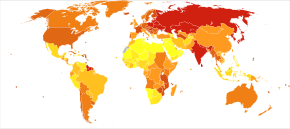
Deaths from self-harm per million people in 2012
3–23
24–32
33–49
fifty–61
62–76
77–95
96–121
122–146
147–193
194–395

Earth-map showing the disability-adapted life year, which is a measure of each state's disease burden, for self-inflicted injuries per 100,000 inhabitants in 2004.
no information
less than eighty
80–160
160–240
240–320
320–400
400–480
480–560
560–640
640–720
720–800
800–850
more than 850
It is difficult to gain an authentic picture of incidence and prevalence of self-damage.[8] [83] This is due in a part to a lack of sufficient numbers of defended research centres to provide a continuous monitoring organization.[83] Nonetheless, even with sufficient resources, statistical estimates are rough since about incidences of self-harm are undisclosed to the medical profession equally acts of cocky-harm are frequently carried out in hush-hush, and wounds may be superficial and easily treated by the individual.[8] [83] Recorded figures can be based on three sources: psychiatric samples, hospital admissions and general population surveys.[84]
The World Health Organization estimates that, every bit of 2010, 880,000 deaths occur as a result of self-harm.[85] Well-nigh 10% of admissions to medical wards in the Britain are as a consequence of self-harm, the bulk of which are drug overdoses.[48] However, studies based but on hospital admissions may hide the larger group of self-harmers who practise non need or seek hospital treatment for their injuries,[12] instead treating themselves. Many adolescents who present to full general hospitals with deliberate self-harm report previous episodes for which they did not receive medical attending.[84] In the United States upward to iv% of adults cocky-harm with approximately 1% of the population engaging in chronic or severe self-impairment.[86]
Current research suggests that the rates of self-harm are much higher among young people[8] with the average historic period of onset between xiv and 24.[1] [viii] [ix] [19] [xx] The earliest reported incidents of self-damage are in children between 5 and seven years old.[8] In the United kingdom in 2008 rates of self-harm in young people could exist as high as 33%.[87] In addition there appears to exist an increased risk of self-damage in higher students than among the general population.[34] [86] In a study of undergraduate students in the United states, 9.8% of the students surveyed indicated that they had purposefully cutting or burned themselves on at least one occasion in the past. When the definition of self-damage was expanded to include caput-banging, scratching oneself, and hitting oneself along with cut and burning, 32% of the sample said they had done this.[88] In Ireland, a study found that instances of hospital-treated self-damage were much higher in metropolis and urban districts, than in rural settings.[89] The CASE (Child & Adolescent Self-harm in Europe) written report suggests that the life-fourth dimension run a risk of self-injury is ~i:7 for women and ~i:25 for men.[xc]
Gender differences [edit]
In general, the latest aggregated research has establish no difference in the prevalence of self-harm betwixt men and women.[86] This is in contrast to by inquiry which indicated that up to four times as many females as males have directly experience of self-harm.[12] However, caution is needed in seeing self-impairment as a greater trouble for females, since males may engage in unlike forms of self-impairment (e.grand., striking themselves) which could be easier to hide or explained as the result of different circumstances.[8] [86] Hence, there remain widely opposing views every bit to whether the gender paradox is a real miracle, or simply the artifact of bias in data collection.[83]
The WHO/EURO Multicentre Study of Suicide, established in 1989, demonstrated that, for each age group, the female person rate of self-harm exceeded that of the males, with the highest rate among females in the 13–24 historic period group and the highest rate among males in the 12–34 age group. However, this discrepancy has been known to vary significantly depending upon population and methodological criteria, consistent with wide-ranging uncertainties in gathering and interpreting data regarding rates of self-harm in general.[91] Such problems accept sometimes been the focus of criticism in the context of broader psychosocial interpretation. For example, feminist author Barbara Brickman has speculated that reported gender differences in rates of self-damage are due to deliberate socially biased methodological and sampling errors, directly blaming medical discourse for pathologising the female person.[92]
This gender discrepancy is oft distorted in specific populations where rates of self-damage are inordinately loftier, which may have implications on the significance and estimation of psychosocial factors other than gender. A study in 2003 found an extremely high prevalence of self-harm amongst 428 homeless and runaway youths (anile 16–19) with 72% of males and 66% of females reporting a history of self-harm.[93] However, in 2008, a study of young people and self-harm saw the gender gap widen in the opposite direction, with 32% of young females, and 22% of young males admitting to self-harm.[87] Studies also betoken that males who self-impairment may too exist at a greater risk of completing suicide.[11]
In that location does not appear to be a difference in motivation for self-harm in adolescent males and females. Triggering factors such every bit low self-esteem and having friends and family members who self-harm are likewise common between both males and females.[84] One limited report constitute that, amidst those immature individuals who do self-harm, both genders are merely as every bit likely to use the method of peel-cutting.[94] All the same, females who self-cut are more likely than males to explain their self-harm episode by saying that they had wanted to punish themselves. In New Zealand, more females are hospitalized for intentional cocky-impairment than males. Females more commonly choose methods such as self-poisoning that more often than not are non fatal, just still serious enough to crave hospitalization.[95]
Elderly [edit]
In a study of a district general infirmary in the UK, 5.4% of all the infirmary's self-harm cases were aged over 65. The male to female ratio was 2:3 although the self-harm rates for males and females over 65 in the local population were identical. Over 90% had depressive conditions, and 63% had meaning physical illness. Under 10% of the patients gave a history of before self-damage, while both the repetition and suicide rates were very low, which could be explained by the absence of factors known to be associated with repetition, such as personality disorder and booze abuse.[23] Withal, Overnice Guidance on Self-impairment in the Uk suggests that older people who self-damage are at a greater take chances of completing suicide, with 1 in five older people who self-harm going on to stop their life.[xx] A study completed in Ireland showed that older Irish adults have high rates of deliberate self-harm, but comparatively low rates of suicide.[89]
Developing world [edit]
Just recently have attempts to improve wellness in the developing world concentrated on non but physical illness merely also mental wellness.[96] Deliberate self-harm is common in the developing globe. Inquiry into cocky-harm in the developing earth is all the same even so very limited although an important case report is that of Sri Lanka, which is a country exhibiting a high incidence of suicide[97] and self-poisoning with agricultural pesticides or natural poisons.[96] Many people admitted for deliberate self-poisoning during a written report by Eddleston et al. [96] were young and few expressed a desire to die, but death was relatively common in the immature in these cases. The improvement of medical direction of acute poisoning in the developing world is poor and improvements are required in guild to reduce mortality.
Some of the causes of deliberate self-poisoning in Sri Lankan adolescents included bereavement and harsh subject by parents. The coping mechanisms are being spread in local communities as people are surrounded past others who take previously deliberately harmed themselves or attempted suicide.[96] Ane way of reducing self-harm would be to limit access to poisons;[96] however many cases involve pesticides or yellow oleander seeds, and the reduction of access to these agents would be hard. Nifty potential for the reduction of self-harm lies in instruction and prevention, simply limited resources in the developing world brand these methods challenging.
Prison inmates [edit]
Deliberate self-harm is especially prevalent in prison populations. A proposed caption for this is that prisons are oftentimes violent places, and prisoners who wish to avoid physical confrontations may resort to cocky-harm as a ruse, either to convince other prisoners that they are dangerously insane and resilient to pain or to obtain protection from the prison authorities.[98] Cocky-damage besides occurs often in inmates who are placed in solitary confinement.[99]
History [edit]

The results of self-flagellation, as function of an annual Shia mourning ritual (Muharram)

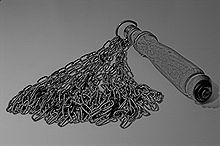
A ritual flagellation tool known as a zanjir, used in Muharram observances
Cocky-impairment was, and in some cases continues to be, a ritual practice in many cultures and religions.
The Maya priesthood performed auto-sacrifice past cutting and piercing their bodies in order to draw blood.[100] A reference to the priests of Baal "cutting themselves with blades until claret flowed" can be institute in the Hebrew Bible.[101] Nevertheless, in Judaism, such self-harm is forbidden under Mosaic police force.[102] It occurred in aboriginal Canaanite mourning rituals, as described in the Ras Shamra tablets.
Cocky-harm is practized in Hinduism past the ascetics known as sadhus. In Catholicism it is known as mortification of the mankind. Some branches of Islam mark the Day of Ashura, the celebration of the martyrdom of Imam Hussein, with a ritual of self-flagellation, using chains and swords.[103]
Dueling scars such as those acquired through academic fencing at certain traditional German universities are an early example of scarification in European society.[104] Sometimes, students who did not fence would scar themselves with razors in imitation.[104]
Constance Lytton, a prominent suffragette, used a stint in Holloway Prison house during March 1909 to mutilate her body. Her plan was to carve 'Votes for Women' from her breast to her cheek, and so that it would ever exist visible. But after completing the V on her breast and ribs she requested sterile dressings to avoid blood poisoning, and her plan was aborted by the government.[105] She wrote of this in her memoir Prisons and Prisoners.
Kikuyu girls cut each other's vulvas in the 1950s every bit a symbol of defiance, in the context of the campaign against female person genital mutilation in colonial Kenya. The movement came to be known as Ngaitana ("I will circumcise myself"), because to avoid naming their friends the girls said they had cut themselves. Historian Lynn Thomas described the episode every bit significant in the history of FGM because information technology made articulate that its victims were also its perpetrators.[106] [107]
Nomenclature [edit]
The term "self-mutilation" occurred in a study by Fifty. East. Emerson in 1913[108] where he considered cocky-cutting a symbolic substitution for masturbation. The term reappeared in an article in 1935 and a book in 1938 when Karl Menninger refined his conceptual definitions of cocky-mutilation. His written report on self-destructiveness differentiated between suicidal behaviors and self-mutilation. For Menninger, self-mutilation was a not-fatal expression of an attenuated expiry wish and thus coined the term fractional suicide. He began a classification organization of six types:
- neurotic – nail-biters, pickers, farthermost hair removal and unnecessary cosmetic surgery.
- religious – self-flagellants and others.
- puberty rites – hymen removal, circumcision or clitoral alteration.
- psychotic – centre or ear removal, genital cocky-mutilation and extreme amputation
- organic brain diseases – which permit repetitive head-banging, mitt-bitter, finger-fracturing or center removal.
- conventional – nail-clipping, trimming of hair and shaving beards.[109]
Pao (1969) differentiated betwixt delicate (low lethality) and coarse (high lethality) self-mutilators who cutting. The "delicate" cutters were young, multiple episodic of superficial cuts and mostly had borderline personality disorder diagnosis. The "fibroid" cutters were older and mostly psychotic.[110] Ross and McKay (1979) categorized self-mutilators into 9 groups: cut, bitter, abrading, severing, inserting, burning, ingesting or inhaling, hitting, and constricting.[111]
After the 1970s the focus of self-harm shifted from Freudian psycho-sexual drives of the patients.[112]
Walsh and Rosen (1988) created four categories numbered by Roman numerals I–IV, defining Self-mutilation as rows II, III and IV.[113]
| Classification | Examples of behavior | Degree of Physical Damage | Psychological State | Social Acceptability |
|---|---|---|---|---|
| I | Ear-piercing, blast-biting, small tattoos, cosmetic surgery (not considered self-harm by the bulk of the population) | Superficial to mild | Benign | Mostly accepted |
| 2 | Piercings, saber scars, ritualistic clan scarring, sailor and gang tattoos, minor wound-excoriation, trichotillomania | Mild to moderate | Beneficial to agitated | Subculture acceptance |
| Three | Wrist- or body-cutting, self-inflicted cigarette burns and tattoos, major wound-excoriation | Mild to moderate | Psychic crisis | Accepted by some subgroups just not by the full general population |
| IV | Auto-castration, self-enucleation, amputation | Severe | Psychotic decompensation | Unacceptable |
Favazza and Rosenthal (1993) reviewed hundreds of studies and divided self-mutilation into 2 categories: culturally sanctioned self-mutilation and deviant self-mutilation.[114] Favazza besides created two subcategories of sanctioned self-mutilations; rituals and practices. The rituals are mutilations repeated generationally and "reflect the traditions, symbolism, and beliefs of a society" (p. 226). Practices are historically transient and cosmetic such as piercing of earlobes, nose, eyebrows as well as male circumcision (for non-Jews) while Deviant self-mutilation is equivalent to self-harm.[112] [115]
Awareness and opposition [edit]
In that location are many movements among the general self-damage community to make self-impairment itself and treatment improve known to mental health professionals, besides as the general public. For case, March i is designated as Self-injury Sensation Twenty-four hours (SIAD) effectually the earth.[116] On this twenty-four hour period, some people cull to be more open about their own self-damage, and sensation organizations brand special efforts to raise awareness nigh cocky-harm.[117]
Other animals [edit]
Self-harm in non-human mammals is a well-established merely non widely known phenomenon. Its study under zoo or laboratory weather could lead to a better understanding of self-harm in human patients.[24]
Zoo or laboratory rearing and isolation are of import factors leading to increased susceptibility to cocky-harm in higher mammals, e.m., macaque monkeys.[24] Non-primate mammals are also known to mutilate themselves under laboratory conditions after administration of drugs.[24] For instance, pemoline, clonidine, amphetamine, and very high (toxic) doses of caffeine or theophylline are known to precipitate self-damage in lab animals.[118] [119]
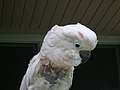
In dogs, canine obsessive-compulsive disorder can atomic number 82 to self-inflicted injuries, for example canine lick granuloma. Captive birds are sometimes known to engage in feather-plucking, causing damage to feathers that can range from feather shredding to the removal of well-nigh or all feathers within the bird'southward reach, or even the mutilation of pare or muscle tissue.[120] [121] [122]
Breeders of bear witness mice have noticed like behaviors. Ane known as "barbering" involves a mouse obsessively training the whiskers and facial fur off of themselves and cage-mates.[123]
See also [edit]
- Cocky-subversive behavior
- Self-hatred
- Self-Injurious Beliefs Inhibiting System
References [edit]
- ^ a b c Laye-Gindhu A, Schonert-Reichl KA (2005). "Nonsuicidal Self-Damage Amid Community Adolescents: Agreement the "Whats" and "Whys" of Self-Impairment". Journal of Youth and Adolescence. 34 (5): 447–457. doi:x.1007/s10964-005-7262-z. S2CID 145689088.
- ^ a b c d e f Klonsky ED (March 2007). "The functions of deliberate self-injury: a review of the bear witness". Clinical Psychology Review. 27 (ii): 226–239. doi:ten.1016/j.cpr.2006.08.002. PMID 17014942.
- ^ a b Muehlenkamp JJ (April 2005). "Self-injurious behavior every bit a divide clinical syndrome". The American Periodical of Orthopsychiatry. 75 (two): 324–333. doi:x.1037/0002-9432.75.2.324. PMID 15839768.
- ^ Groschwitz RC, Plener P. "The Neurobiology of Non-suicidal Self-injury (NSSI) : A review" (PDF). Suicidology Online. 3: 24–32. Retrieved 2018-03-07 .
- ^ Davis JL. "Cut and Self-Harm: Warning Signs and Treatment". WebMD . Retrieved fourteen Apr 2018.
- ^ Mayo Clinic Staff. "Self-injury/cutting". Mayo Clinic. Mayo Foundation for Medical Pedagogy and Inquiry (MFMER). Retrieved fourteen April 2018.
- ^ a b c Skegg K (2005). "Self-harm". Lancet. 366 (9495): 1471–1483. doi:10.1016/s0140-6736(05)67600-three. PMID 16243093. S2CID 208794175.
- ^ a b c d e f yard h i j yard l Truth Hurts Study. Mental Health Foundation. 2006. ISBN978-1-903645-81-ix . Retrieved 2008-06-11 .
- ^ a b c d Klonsky ED (November 2007). "Non-suicidal self-injury: an introduction". Journal of Clinical Psychology. 63 (xi): 1039–1043. doi:10.1002/jclp.20411. PMID 17932979.
- ^ Farber SK, Jackson CC, Tabin JK, Bachar Eastward (2007). "Death and annihilation anxieties in anorexia nervosa, bulimia, and self-mutilation". Psychoanalytic Psychology. 24 (2): 289–305. doi:10.1037/0736-9735.24.2.289.
- ^ a b Hawton One thousand, Zahl D, Weatherall R (June 2003). "Suicide following deliberate self-harm: long-term follow-up of patients who presented to a general hospital". The British Periodical of Psychiatry. 182 (6): 537–542. doi:x.1192/bjp.182.6.537. PMID 12777346.
- ^ a b c d e f g h i Fox C, Hawton K (2004). Deliberate Self-Harm in Adolescence. London: Jessica Kingsley. ISBN978-1-84310-237-3.
- ^ a b c Suyemoto KL (August 1998). "The functions of self-mutilation". Clinical Psychology Review. 18 (5): 531–554. doi:10.1016/S0272-7358(97)00105-0. PMID 9740977.
- ^ a b c d Swales M. "Pain and deliberate self-harm". The Welcome Trust. Archived from the original on 2008-09-16. Retrieved 2008-05-26 .
- ^ Encounter Impression formation.
- ^ a b c d eastward f Meltzer H, Lader D, Corbin T, Singleton N, Jenkins R, Brugha T (2000). Non Fatal Suicidal Behaviour Among Adults aged xvi to 74. Great United kingdom of great britain and northern ireland: The Jotter office. ISBN978-0-11-621548-2.
- ^ a b c Rea Thousand, Aiken F, Borastero C (1997). "Edifice therapeutic staff: customer relationships with women who self-harm". Women's Health Issues. 7 (2): 121–125. doi:10.1016/S1049-3867(96)00112-0. PMID 9071885.
- ^ a b c d Klonsky ED, Glenn CR (March 2008). "Resisting Urges to Self-Injure". Behavioural and Cerebral Psychotherapy. 36 (2): 211–220. doi:10.1017/S1352465808004128. PMC5841247. PMID 29527120.
- ^ a b Schmidtke A, Bille-Brahe U, DeLeo D, Kerkhof A, Bjerke T, Crepet P, et al. (May 1996). "Attempted suicide in Europe: rates, trends and sociodemographic characteristics of suicide attempters during the period 1989-1992. Results of the WHO/EURO Multicentre Study on Parasuicide". Acta Psychiatrica Scandinavica. 93 (v): 327–338. doi:10.1111/j.1600-0447.1996.tb10656.x. PMID 8792901. S2CID 25806385.
- ^ a b c d National Found for Clinical Excellence (2004). National Clinical Practice Guideline Number 16: Self-harm (PDF). The British Psychological Society. Retrieved 2009-12-13 .
- ^ a b c d e Hawton K, Saunders KE, O'Connor RC (June 2012). "Self-harm and suicide in adolescents". Lancet. 379 (9834): 2373–2382. doi:10.1016/S0140-6736(12)60322-5. PMID 22726518. S2CID 151486181.
- ^ Thomas B, Hardy S, Cutting P (1997). Stuart and Sundeen'due south mental health nursing: principles and practice. Elsevier Health Sciences. p. 343. ISBN978-0-7234-2590-8.
- ^ a b Pierce D (1987). "Deliberate cocky-harm in the elderly". International Journal of Geriatric Psychiatry. 2 (ii): 105–110. doi:ten.1002/gps.930020208. S2CID 145408278.
- ^ a b c d Jones IH, Barraclough BM (July 1978). "Car-mutilation in animals and its relevance to self-injury in man". Acta Psychiatrica Scandinavica. 58 (1): 40–47. doi:10.1111/j.1600-0447.1978.tb06918.x. PMID 99981. S2CID 24737213.
- ^ a b Self Injury Awareness Volume. S. l.: FirstSigns. 2007. ISBN978-0-9555506-0-7. Archived from the original on 2008-09-23. Retrieved 2008-05-26 .
- ^ Duffy K. "Case of Self-inflicted wounds in World War I". Retrieved 2008-05-26 .
- ^ Spartacus Educational, Reasons for Self inflicted wounds, archived from the original on 2008-05-22, retrieved 2008-05-26
- ^ a b Diagnostic and Statistical Manual of Mental Disorders, 5th Edition: DSM-5. APA. May 27, 2013. p. 803. ISBN978-0-89042-555-eight.
- ^ Stetka BS, Correll CU (21 May 2013). "A Guide to DSM-5: Section 3 Disorders". Medscape.
- ^ a b c Spandler H (1996). Who's Hurting Who? Young people, self-harm and suicide. Manchester: 42nd Street. ISBN978-ane-900782-00-5.
- ^ a b c Pembroke LR, ed. (1994). Self-harm – Perspectives from personal experience . Chipmunka/Survivors Speak Out. ISBN978-one-904697-04-6.
- ^ Iwata BA, Dorsey MF, Slifer KJ, Bauman KE, Richman GS (1994). "Toward a functional assay of self-injury". Journal of Applied Behavior Analysis. 27 (2): 197–209. doi:10.1901/jaba.1994.27-197. PMC1297798. PMID 8063622.
- ^ Claveirole A, Gaughan M (2011). Understanding Children and Young People's Mental Health. West Sussex, United kingdom of great britain and northern ireland: John Wiley & Sons. p. 75. ISBN978-0-470-72345-six . Retrieved 9 February 2011.
- ^ a b c Greydanus DE, Shek D (September 2009). "Deliberate self-harm and suicide in adolescents". The Keio Journal of Medicine. 58 (3): 144–151. doi:10.2302/kjm.58.144. PMID 19826208.
- ^ a b c "What self-injury is". LifeSIGNS. Retrieved 2012-10-05 .
- ^ Hodgson Southward (2004). "Cutting Through the Silence: A Sociological Construction of Self-Injury". Sociological Inquiry. 74 (ii): 162–179. doi:10.1111/j.1475-682X.2004.00085.x.
- ^ "Self Injury/Cutting". Mayo Dispensary. 2017. Retrieved 15 November 2017.
- ^ a b Johnson CP, Myers SM (November 2007). "Identification and evaluation of children with autism spectrum disorders". Pediatrics. 120 (5): 1183–1215. doi:10.1542/peds.2007-2361. PMID 17967920. Archived from the original on 2009-02-08. For a lay summary, meet New AAP Reports Assistance Pediatricians Place and Manage Autism Earlier, American Academy of Pediatrics, 2007-10-29, archived from the original on 2011-03-24
- ^ a b Dominick KC, Davis NO, Lainhart J, Tager-Flusberg H, Folstein Due south (2007). "Atypical behaviors in children with autism and children with a history of linguistic communication impairment". Research in Developmental Disabilities. 28 (2): 145–162. doi:ten.1016/j.ridd.2006.02.003. PMID 16581226.
- ^ Joyce PR, Light KJ, Rowe SL, Cloninger CR, Kennedy MA (March 2010). "Self-mutilation and suicide attempts: relationships to bipolar disorder, borderline personality disorder, temperament and character". The Australian and New Zealand Journal of Psychiatry. 44 (3): 250–257. doi:10.3109/00048670903487159. PMID 20180727. S2CID 12374927.
- ^ Hawton One thousand, Kingsbury S, Steinhardt K, James A, Fagg J (June 1999). "Repetition of deliberate self-harm by adolescents: the role of psychological factors". Journal of Boyhood. 22 (3): 369–378. doi:x.1006/jado.1999.0228. PMID 10462427.
- ^ Wessely S, Akhurst R, Brown I, Moss Fifty (June 1996). "Deliberate self harm and the Probation Service; an overlooked public wellness problem?". Journal of Public Health Medicine. 18 (2): 129–132. doi:ten.1093/oxfordjournals.pubmed.a024471. PMID 8816309.
- ^ Urnes O (Apr 2009). "[Cocky-damage and personality disorders]". Tidsskrift for den Norske Laegeforening. 129 (9): 872–876. doi:10.4045/tidsskr.08.0140. PMID 19415088.
- ^ Gelder MG, López JJ, Aliño I, Andreasen NC (2009). New Oxford textbook of psychiatry (2nd ed.). Oxford: Oxford University Press. p. 171. ISBN978-0-19-969675-eight.
- ^ a b Humphries SR (March 1988). "Munchausen syndrome. Motives and the relation to deliberate cocky-harm". The British Journal of Psychiatry. 152 (3): 416–417. doi:ten.1192/bjp.152.3.416. PMID 3167380. S2CID 11881655.
- ^ Antai-Otong, D. 2008. Psychiatric Nursing: Biological and Behavioral Concepts. 2d edition. Canada: Thompson Delmar Learning
- ^ a b Stiff M (1999). A Bright Red Scream: Self-Mutilation and the Language of Pain. Penguin. ISBN978-0-14-028053-1.
- ^ a b "Self-harm". British Dissemination Corporation. 2004-12-06. Archived from the original on 2009-03-19. Retrieved 2010-01-04 .
- ^ "Third World faces self-harm epidemic". BBC News. 1998-07-x. Retrieved 2008-05-26 .
- ^ Fikette 50 (2005). "The deportation auto: unmonitored and unimpeded". Found of Race Relations. Archived from the original on 2008-03-03. Retrieved 2008-04-26 .
- ^ Connolly Dr., Zervos MJ, Barone CJ, Johnson CC, Joseph CL (November 2016). "The Mental Health of Transgender Youth: Advances in Agreement". The Journal of Boyish Wellness. 59 (5): 489–495. doi:10.1016/j.jadohealth.2016.06.012. PMID 27544457.
- ^ a b Butler C, Joiner R, Bradley R, Bowles M, Bowes A, Russell C, Roberts V (2019-10-02). "Self-harm prevalence and ideation in a customs sample of cis, trans and other youth". The International Journal of Transgenderism. xx (iv): 447–458. doi:10.1080/15532739.2019.1614130. PMC6913646. PMID 32999629.
- ^ "Transgender youths who self-harm: perspectives from..." MHT . Retrieved 2021-12-26 .
- ^ "Lesch-Nyhan syndrome". Genetics Dwelling Reference. U. Southward. National Library of Medicine. Retrieved 2010-01-13 .
- ^ National Treatment Agency for Substance Misuse (2007). "Drug misuse and dependence – Great britain guidelines on clinical management" (PDF). Uk: Department of Health. Archived from the original (PDF) on 2012-x-11.
- ^ Bell Grand, O'Doherty E, O'Carroll A, McAnaney B, Graber S, McGale B, Hutchinson D, Moran P, Bonner B, O'Hagan D, Arensman E, Reulbach U, Corcoran P, Hawton K (21 Jan 2010), "Northern Ireland Registry of Deliberate Cocky-Harm Western Expanse, Ii year report. January 1st 2007 – 31 December 2008" (PDF), Health and Social Intendance in Northern Ireland, Northern Ireland: CAWT, archived from the original (PDF) on eight July 2011
- ^ Rossow I, Hawton 1000, Ystgaard Thousand (2009). "Cannabis use and deliberate self-harm in boyhood: a comparative analysis of associations in England and Kingdom of norway". Archives of Suicide Research. 13 (4): 340–348. doi:10.1080/13811110903266475. PMID 19813111. S2CID 2409791.
- ^ Escelsior A, Belvederi Murri G, Corsini GP, Serafini Thousand, Aguglia A, Zampogna D, et al. (January 2021). "Cannabinoid use and self-injurious behaviors: A systematic review and meta-analysis". Journal of Affective Disorders. 278: 85–98. doi:10.1016/j.jad.2020.09.020. PMID 32956965.
- ^ a b c Cutter D, Jaffe J, Segal J (2008). "Self-Injury: Types, Causes and Treatment". HELPGUIDE.org. Archived from the original on 2008-05-11. Retrieved 2008-05-26 .
- ^ Hawton K, Cole D, O'Grady J, Osborn M (September 1982). "Motivational aspects of deliberate self-poisoning in adolescents". The British Journal of Psychiatry. 141 (iii): 286–291. doi:x.1192/bjp.141.3.286. PMID 7139213. S2CID 38556782.
- ^ "Myths nigh self harm". Archived from the original on 2019-11-02. Retrieved 2022-01-19 .
- ^ a b "Precursors to Cocky Injury". LifeSIGNS. Retrieved 2012-ten-05 .
- ^ Nixon MK, Cloutier PF, Aggarwal S (November 2002). "Affect regulation and addictive aspects of repetitive self-injury in hospitalized adolescents". Periodical of the American Academy of Kid and Adolescent Psychiatry. 41 (11): 1333–1341. doi:10.1097/00004583-200211000-00015. PMID 12410076.
- ^ Kross Eastward, Berman MG, Mischel W, Smith EE, Wager TD (April 2011). "Social rejection shares somatosensory representations with physical hurting". Proceedings of the National University of Sciences of the Usa of America. 108 (fifteen): 6270–6275. Bibcode:2011PNAS..108.6270K. doi:10.1073/pnas.1102693108. PMC3076808. PMID 21444827.
- ^ Porges SW (October 2001). "The polyvagal theory: phylogenetic substrates of a social nervous system". International Journal of Psychophysiology. 42 (2): 123–146. doi:10.1016/s0167-8760(01)00162-three. PMID 11587772.
- ^ Crowell SE, Beauchaine TP, McCauley East, Smith CJ, Stevens AL, Sylvers P (2005). "Psychological, autonomic, and serotonergic correlates of parasuicide amongst adolescent girls". Development and Psychopathology. 17 (4): 1105–1127. doi:10.1017/s0954579405050522. PMID 16613433. S2CID 12056367.
- ^ Nock MK, Mendes WB (Feb 2008). "Physiological arousal, distress tolerance, and social problem-solving deficits amidst adolescent self-injurers". Journal of Consulting and Clinical Psychology. 76 (1): 28–38. CiteSeerX10.1.one.506.4280. doi:10.1037/0022-006x.76.i.28. PMID 18229980.
- ^ a b c Glenn CR, Esposito EC, Porter Air-conditioning, Robinson DJ (2019). "Show Base Update of Psychosocial Treatments for Cocky-Injurious Thoughts and Behaviors in Youth". Journal of Clinical Kid and Boyish Psychology. 48 (three): 357–392. doi:10.1080/15374416.2019.1591281. PMC6534465. PMID 31046461.
- ^ "Self-harm | NAMI: National Alliance on Mental Disease". world wide web.nami.org . Retrieved 2018-10-17 .
- ^ Hawton Thou, Witt KG, Taylor Salisbury TL, Arensman E, Gunnell D, Hazell P, et al. (July 2015). "Pharmacological interventions for self-harm in adults". The Cochrane Database of Systematic Reviews. 7 (7): CD011777. doi:x.1002/14651858.CD011777. hdl:10536/DRO/DU:30080508. PMC8637297. PMID 26147958.
- ^ Witt KG, Hetrick SE, Rajaram G, Hazell P, Taylor Salisbury TL, Townsend E, Hawton K (March 2021). "Interventions for self-damage in children and adolescents". The Cochrane Database of Systematic Reviews. 2021 (3): CD013667. doi:10.1002/14651858.cd013667.pub2. PMC8094399. PMID 33677832.
- ^ a b Hawton Grand, Witt KG, Taylor Salisbury TL, Arensman E, Gunnell D, Townsend Eastward, et al. (December 2015). "Interventions for self-impairment in children and adolescents". The Cochrane Database of Systematic Reviews. 2021 (12): CD012013. doi:10.1002/14651858.CD012013. hdl:1854/LU-8573483. PMC8786270. PMID 26688129.
- ^ American Self-Harm Information Clearinghouse, Cocky-help – how do I cease right now?, archived from the original on 2001-12-16, retrieved 2008-04-26
- ^ Ougrin D, Tranah T, Leigh E, Taylor L, Asarnow JR (April 2012). "Practitioner review: Self-impairment in adolescents". Journal of Kid Psychology and Psychiatry, and Allied Disciplines. 53 (4): 337–350. doi:10.1111/j.1469-7610.2012.02525.x. PMID 22329807.
- ^ Ougrin D, Tranah T, Stahl D, Moran P, Asarnow JR (February 2015). "Therapeutic interventions for suicide attempts and cocky-harm in adolescents: systematic review and meta-assay". Journal of the American University of Child and Boyish Psychiatry. 54 (2): 97–107.e2. doi:ten.1016/j.jaac.2014.10.009. PMID 25617250.
- ^ Bird F, Dores PA, Moniz D, Robinson J (July 1989). "Reducing severe aggressive and self-injurious behaviors with functional communication training". American Periodical of Mental Retardation. 94 (i): 37–48. PMID 2751890.
- ^ Carr EG, Durand VM (1985). "Reducing behavior problems through functional communication preparation". Journal of Applied Behavior Analysis. 18 (2): 111–126. doi:ten.1901/jaba.1985.xviii-111. PMC1307999. PMID 2410400.
- ^ Sigafoos J, Meikle B (Jan 1996). "Functional advice training for the treatment of multiply determined challenging behavior in 2 boys with autism". Behavior Modification. 20 (1): 60–84. doi:10.1177/01454455960201003. PMID 8561770. S2CID 36780321.
- ^ Muehlenkamp JJ (2006). "Empirically supported treatments and general therapy guidelines for non-suicidal cocky-injury". Journal of Mental Wellness Counseling. 28 (2): 166–185. CiteSeerX10.1.i.666.6159. doi:x.17744/mehc.28.2.6w61cut2lxjdg3m7.
- ^ Hawton 1000, Arensman E, Townsend E, Bremner S, Feldman Due east, Goldney R, et al. (August 1998). "Deliberate self damage: systematic review of efficacy of psychosocial and pharmacological treatments in preventing repetition". BMJ. 317 (7156): 441–447. doi:10.1136/bmj.317.7156.441. PMC28637. PMID 9703526.
- ^ "Biofeedback". FingerFreak.com. Archived from the original on 2011-05-08. Retrieved 2009-06-02 .
- ^ Self harm – Towards Promise and Recovery (PDF), Harmless, archived from the original on 2012-03-xiii, retrieved 2009-12-13
- ^ a b c d Bowen Air conditioning, John AM (2001). "Gender differences in presentation and conceptualization of adolescent self-injurious behavior: implications for therapeutic do". Counselling Psychology Quarterly. 14 (4): 357–379. doi:10.1080/09515070110100956. S2CID 145405708.
- ^ a b c Rodham Grand, Hawton M, Evans Eastward (2005). "Deliberate Self-Harm in Adolescents: the Importance of Gender". Psychiatric Times. 22 (i).
- ^ Lozano R, Naghavi M, Foreman M, Lim S, Shibuya Thou, Aboyans Five, et al. (December 2012). "Global and regional mortality from 235 causes of death for 20 historic period groups in 1990 and 2010: a systematic analysis for the Global Burden of Disease Study 2010". Lancet. 380 (9859): 2095–2128. doi:10.1016/S0140-6736(12)61728-0. hdl:10536/DRO/DU:30050819. PMID 23245604. S2CID 1541253.
- ^ a b c d Kerr PL, Muehlenkamp JJ, Turner JM (2010). "Nonsuicidal self-injury: a review of current enquiry for family medicine and master intendance physicians". Journal of the American Board of Family Medicine. 23 (2): 240–259. doi:x.3122/jabfm.2010.02.090110. PMID 20207935.
- ^ a b New survey reveals almost ane in iii immature females take tried to self-harm (PDF), Analogousness Healthcare, 2008, archived from the original (PDF) on 2008-12-01, retrieved 2009-12-13
- ^ Vanderhoff H, Lynn SJ (2001). "The assessment of self-mutilation: Issues and clinical considerations". Journal of Threat Assessment. ane: 91–109. doi:ten.1300/J177v01n01_07.
- ^ a b Corcoran P, Reulbach U, Perry IJ, Arensman E (December 2010). "Suicide and deliberate cocky harm in older Irish adults". International Psychogeriatrics. 22 (8): 1327–1336. doi:10.1017/S1041610210001377. PMID 20716390. S2CID 21390675.
- ^ Madge N, Hewitt A, Hawton 1000, de Wilde EJ, Corcoran P, Fekete Due south, et al. (June 2008). "Deliberate self-harm inside an international community sample of young people: comparative findings from the Child & Adolescent Self-harm in Europe (CASE) Study". Journal of Kid Psychology and Psychiatry, and Allied Disciplines. 49 (6): 667–677. doi:10.1111/j.1469-7610.2008.01879.10. PMID 18341543.
- ^ O'Brien A. "Women and Parasuicide: a Literature Review". Women'south Wellness Council. Archived from the original on April 28, 2008. Retrieved 2008-05-26 .
- ^ Brickman BJ (2004). "'Delicate' Cutters: Gendered Self-mutilation and Attractive Flesh in Medical Discourse". Torso and Gild. x (iv): 87–111. doi:10.1177/1357034X04047857. S2CID 145191075.
- ^ Tyler KA, Whitbeck LB, Hoyt DR, Johnson KD (2003). "Self Mutilation and Homeless Youth: The Office of Family Abuse, Street Experiences, and Mental Disorders". Journal of Inquiry on Adolescence. 13 (4): 457–474. doi:x.1046/j.1532-7795.2003.01304003.x.
- ^ Marchetto MJ (September 2006). "Repetitive skin-cutting: Parental bonding, personality and gender". Psychology and Psychotherapy: Theory, Research and Practice. 79 (three): 445–459(15). doi:10.1348/147608305X69795. PMID 16945201.
- ^ Hospitalisation for intentional self-harm, New Zealand Wellness Information Service, archived from the original on Oct xv, 2008, retrieved 2008-05-03
- ^ a b c d e Eddleston One thousand, Sheriff MH, Hawton Grand (July 1998). "Deliberate self harm in Sri Lanka: an overlooked tragedy in the developing world". BMJ. 317 (7151): 133–135. doi:10.1136/bmj.317.7151.133. PMC1113497. PMID 9657795.
- ^ Ministry of Health. Annual wellness bulletin, Sri Lanka, 1995. Colombo, Sri Lanka: Ministry of Health (1997)
- ^ Diego Gambetta. Codes of the Underworld. Princeton. ISBN 978-0-691-11937-iii
- ^ Kaba F, Lewis A, Glowa-Kollisch Southward, Hadler J, Lee D, Alper H, et al. (March 2014). "Solitary solitude and take chances of self-harm among jail inmates". American Journal of Public Health. 104 (3): 442–447. doi:10.2105/ajph.2013.301742. PMC3953781. PMID 24521238.
- ^ Gualberto A (1991). An Overview of the Maya Earth. Produccion Editorial Dante. pp. 207–208. ISBN978-968-7232-19-5.
- ^ 1 Kings 18:28
- ^ Maimonides, Mishneh Torah, Hilchot Khovel u-Mazik ch. 5, etc. See also Damages (Jewish police).
- ^ Zabeeh I, Ashura observed with blood streams to mark Karbala tragedy, Jafariya news, retrieved 2011-09-04
- ^ a b DeMello M (2007). Encyclopedia of torso beautification. Greenwood Publishing Group. p. 237. ISBN978-0-313-33695-9.
- ^ "Victoria's Sisters past Simon Schama, Lady Lytton's self mutilation gesture for 'Votes'". BBC.
- ^ Thomas LM (2000). "'Ngaitana (I Volition Circumcise Myself)': Lessons from Colonial Campaigns to Ban Excision in Meru, Kenya.". In Shell-Duncan B, Hernlund Y (eds.). Female person "circumcision" in Africa : civilization, controversy, and change. Boulder: Lynne Rienner Publishers. pp. 129–131. ISBN978-1-55587-995-2. (131 for the girls every bit "key actors")
- ^ Thomas 50 (2003). Politics of the Womb: Women, Reproduction, and the State in Kenya. Berkeley: University of California Press. pp. 89–91.
Besides run across Thomas LM (November 1996). ""Ngaitana (I will circumcise myself)": the gender and generational politics of the 1956 ban on clitoridectomy in Meru, Kenya". Gender & History. 8 (3): 338–363. doi:ten.1111/j.1468-0424.1996.tb00062.x. PMID 12322506.
- ^ Emerson LE (November 1913). William A. White, Smith Ely Jelliffe (eds.). "The case of Miss A: A preliminary report of a psychoanalysis study and treatment of a case of self-mutilation". Psychoanalytic Review. 1 (1): 41–54. Retrieved 2009-06-15 .
- ^ Menninger 1000 (1935). "A psychoanalytic study of the significance of self-mutilation". Psychoanalytic Quarterly. 4 (3): 408–466. doi:10.1080/21674086.1935.11925248.
- ^ Pao PN (Baronial 1969). "The syndrome of delicate self-cut". The British Journal of Medical Psychology. 42 (3): 195–206. doi:ten.1111/j.2044-8341.1969.tb02071.ten. PMID 5808710.
- ^ Ross RR, McKay HB (1979). Self-Mutilation. Lexington Books. ISBN978-0-669-02116-5 . Retrieved 2011-03-12 .
- ^ a b Roe-Sepowitz DE (2005). Indicators of Cocky-Mutilation: Youth in Custody (PDF) (Ph.D. thesis). The Florida State University College of Social Work. pp. 8–10, 77–88. Archived from the original (PDF) on 2012-02-25. Retrieved 2009-06-fifteen .
- ^ Walsh BW, Rosen PM (1988). Self Mutilation: Theory, Research and Treatment . Guilford. of N..Y, NY. ISBN978-0-89862-731-2.
- ^ Favazza AR, Rosenthal RJ (February 1993). "Diagnostic problems in cocky-mutilation". Hospital & Community Psychiatry. 44 (2): 134–140. doi:10.1176/ps.44.two.134. PMID 8432496.
- ^ Favazza AR (1996). Bodies Under Siege, 2nd ed. Baltimore: Johns Hopkins Printing. ISBN978-0-8018-5300-5 . Retrieved 2009-06-22 .
- ^ Self injury sensation day, LifeSIGNS, retrieved 2012-05-10
- ^ LifeSIGNS spider web pages, LifeSIGNS, retrieved 2012-05-10
- ^ Mueller K, Nyhan WL (June 1983). "Clonidine potentiates drug induced cocky-injurious behavior in rats". Pharmacology, Biochemistry, and Behavior. 18 (half dozen): 891–894. doi:10.1016/S0091-3057(83)80011-two. PMID 6684300. S2CID 43743590.
- ^ Kies SD, Devine DP (December 2004). "Self-injurious behaviour: a comparison of caffeine and pemoline models in rats". Pharmacology, Biochemistry, and Behavior. 79 (iv): 587–598. doi:10.1016/j.pbb.2004.09.010. PMID 15582667. S2CID 11695905.
- ^ "Feather Plucking in Pet Birds". Dazzler Of Birds.
- ^ "Feather Damaging Behavior – FDB". birdchannel.com. Archived from the original on 2008-10-22.
- ^ "Parrots' behaviors mirror homo mental disorders". purdue.edu. Archived from the original on 2018-x-03. Retrieved 2013-10-26 .
- ^ Kalueff AV, Minasyan A, Keisala T, Shah ZH, Tuohimaa P (Jan 2006). "Hair barbering in mice: implications for neurobehavioural research". Behavioural Processes. 71 (1): 8–xv. doi:10.1016/j.beproc.2005.09.004. PMID 16236465. S2CID 9132709.
External links [edit]
 | Wikimedia Commons has media related to Self damage. |
- Information near self-impairment from the Regal Higher of Psychiatrists
Source: https://en.wikipedia.org/wiki/Self-harm
0 Response to "What Is Is Called When You Mutilate Yourself Over and Over Again"
Post a Comment